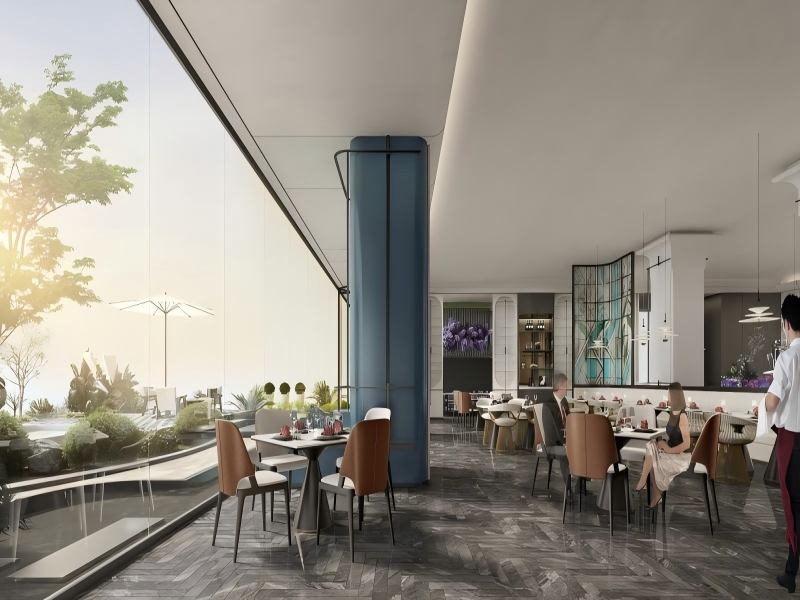
Amid the tide of consumption upgrading and the evolution of urban lifestyles, hotel catering is undergoing a profound transformation. It is no longer merely a "supporting facility" to meet the basic need of guests for satiety, but has evolved into a core "content asset" that drives non-room revenue, shapes brand image, and connects with the urban community. How to create a "destination restaurant" that can attract local customers to visit repeatedly and generate its own traffic? This has become a strategic proposition in hotel development and operation.

Not so long ago, the core task of hotel catering was to serve guests, meet star-rating requirements, or cater to business banquets. This "supporting facility mindset" led many restaurants to have vague positioning, low revenue per square meter, and even become a cost burden. However, the tightening of the policy environment (such as restrictions on official consumption), the transformation of consumption structure (localization, socialization, and experience-oriented), and the strong rise of independent urban catering brands are forcing hotel catering to reshape its value.
-
Shrinking banquet market: Traditional Chinese restaurants and large banquet halls that rely on government and state-owned enterprise receptions are facing the pressure of rising vacancy rates. (According to the 2025 China Catering Industry Report by the China Hotel Association, the revenue of traditional banquets in high-star hotels has declined significantly due to the impact of consumption structure transformation.)
-
Upgraded consumer demand: Urban consumers are increasingly pursuing catering experiences with a sense of design, cultural connotation, and a sense of community belonging. Independent restaurants, boutique cafes, and chef-owned restaurants quickly gain consumer attention through social media, diverting the local market that originally belonged to hotel guests.
-
Intensified traffic competition: Against the backdrop of the fading dividends of Online Travel Agencies (OTA) and fierce competition in room rates, hotels are in urgent need of content touchpoints that can proactively attract external traffic and create unique experiences. Catering, with its high frequency and strong social attributes, has become the key to breaking the deadlock.
Against this backdrop, the "destination restaurant" has emerged. It is not a simple upgrade of traditional hotel restaurants, but a strategic product with independent brand value, urban appeal, and sustainable community operation capabilities. It is not only a "magnet" for hotels to attract traffic, but also part of the local people's lifestyle, which can effectively increase the repurchase rate and brand reputation. Its creation must be incorporated into the top-level design in the early stage of hotel development.

Successful hotel-based destination restaurants often make breakthroughs in the following dimensions, transforming from "auxiliary functions" to "standalone experiential content":
-
Pain Point: Traditional hotel restaurants are often hidden deep in the podium building, with obscure entrances and complicated circulation routes (requiring passage through the lobby and elevator rides), which naturally discourages external customers from visiting.
-
Solution: Destination restaurants emphasize "a clear main entrance, visible facade, and openness to the city". During the master planning phase, a distinct urban-facing interface is defined to separate the restaurant from the guest room area.
-
Case Study: Yiwah Hotel Wanda Hangzhou East Railway Station has created an "urban living room" model. Its street-facing entrance directly leads to a space that functions as a café by day and a bar by night, as well as a co-working area, forming a "semi-acquaintance community" ecosystem. By day, it offers West Lake Longjing tea tastings and intangible cultural heritage (ICH) handicraft experiences; by night, it transforms into a bar and co-working venue. Through the integration of multiple spatial functions, it breaks the boundaries of traditional catering and has become a high-frequency consumption spot for the local community. The proportion of daily consumption by non-hotel guests is significantly higher than that of traditional hotel catering.


△Image Source: Yiwah Hotel Wanda Hangzhou
-
Pain Point: When attached to the hotel’s parent brand, the restaurant lacks unique recognition and easily falls into homogeneous competition.
-
Solution: Define the restaurant’s brand positioning in the early development stage, build a complete brand system, and equip it with an independent operation and marketing team or a cooperative mechanism.
-
Case Study: Languili Restaurant at Ouxia·Mediterranean Hotel (Guilin Elephant Trunk Hill Two Rivers and Four Lakes Branch) takes the "Aegean Proposal Rooftop" as its core IP. Integrating Mediterranean-style architecture with the scenery of the Lijiang River, it launches customized proposal packages and local cultural experience activities. This not only attracts more consumers to "check in" (visit and share on social media) but also further enhances the hotel’s brand premium and increases its revenue.


△Image Source: Ouxia·Mediterranean Hotel
-
Pain Point: Over-reliance on one-time consumption or high-spending banquets results in low customer stickiness.
-
Solution: The core goal is to create repeatable consumption scenarios and foster sustainable customer relationships. Spatial design should prioritize daily and social scenarios (such as small tables, bars, shared long tables, and open kitchens), and be supported by a membership system, CRM (Customer Relationship Management), and exclusive events (e.g., chef’s tables, wine tastings, and theme parties).
-
Case Study: Crossroads Kitchen at Hyatt Tokyo adopts a "live kitchen + LED art corridor" design. Guests serve themselves while immersing in the cultural atmosphere of Shinjuku—this design not only reduces food waste but also enhances the uniqueness of the dining experience.


△Image Source: Hyatt Regency Tokyo
-
Pain Point: Lack of visual memorability and talkability makes it difficult to stand out in the age of social media.
-
Solution: A restaurant must be inherently "photogenic, narratable, and shareable"—its spatial design should have visual impact, its dish presentation should tell a story, its service experience should be memorable, its offerings should be updated with solar terms and seasons, and its chefs/bartenders should have personal charisma. During the development phase, spaces for communication (such as photo check-in spots and brand walls) should be reserved.
-
Case Study: The Portman Ritz-Carlton, Shanghai uses Nordic-style dining tables and chairs, paired with unique Bauhaus-style chandeliers. Vibrant Southeast Asian-style floral decorations and green plants create a more lively dining atmosphere for the restaurant. Its most iconic innovations are the "Qi You Han Shang" (A Journey of Dwelling and Savoring) inspired cocktail menu and creative drinks that integrate China’s Eight Major Cuisines.


△Image Source: The Portman Ritz-Carlton, Shanghai
The success of creating a destination restaurant hinges on strategic planning in the early development stage:
-
Core Question: Can external customers easily find and be willing to enter the restaurant?
-
Strategy: Prioritize locations that are street-facing, close to bustling areas, or have independent storefronts; install eye-catching signboards and dedicated drop-off zones; high-rise scenic restaurants should be equipped with independent elevators or clear signage; ensure convenient circulation routes to avoid the need to pass through the hotel lobby.

Abandon the traditional structure dominated by large private rooms and shift to a composite space: incorporate flexibly combinable seating (primarily for 2-4 people), integrate social elements such as bars, communal tables, and open kitchens, use lighting, materials, and partitions to create a sense of hierarchy, and reserve areas for brand culture display and interactive installations (e.g., chef story walls, ingredient display counters).

-
Brand Introduction: Leverage mature brands to attract traffic (e.g., Michelin-starred or Black Pearl restaurants). It is necessary to clarify the right to customize the space, the right to decide on the menu, operational responsibilities, and profit-sharing mechanisms (e.g., Il Ristorante - Niko Romito introduced by The Bulgari Hotel Shanghai).
-
In-House Incubation: This model requires significant investment but ensures clear brand ownership, and a strong operational team must be established (e.g., the century-old Western restaurant at The Yihe Mansions Nanjing).
-
Creative Collaboration: Collaborate with renowned chefs or teams to build distinctive brands (with light asset output), where the hotel provides space and support (e.g., a fusion cuisine restaurant co-created by a hotel in Shenzhen and a local celebrity chef).

-
Core F&B Revenue: Generated from lunch and dinner services, with a focus on table turnover rate and reasonable average customer spending.
-
Membership/Community Revenue: Derived from stored-value cards, annual cards, and exclusive membership benefits.
-
Venue/Brand Collaboration Revenue: Earned through filming rentals, pop-up events, and co-branded activities.
-
Retail Extension Revenue: Coming from sales of specialty ingredients, condiments, and co-branded merchandise.
-
The target customer group is mainly non-hotel guests. The revenue structure must be diversified.

-
From "Supporting Facility" to "Engine": Top-tier restaurants will become the core calling card and traffic entry point of hotel brands. Their influence may even surpass that of guest room types themselves and directly boost the overall asset valuation.
-
From "Space" to "Ecosystem": Destination restaurants will integrate more deeply into the urban cultural ecosystem. They will collaborate with local farms, artists, and cultural institutions to build sustainable content production platforms (such as seasonal-themed menus and gourmet cultural tours), and even launch reverse-output products (private-label goods).
-
From "Single Point" to "Synergy": The value of restaurants will be more prominently reflected in the synergistic effect with other hotel formats (guest rooms, spas, conferences, wedding banquets). Serving as a traffic magnet and experience amplifier, they will jointly enhance the overall competitiveness of the hotel project.
The development of a hotel-based destination restaurant represents a strategic transformation from a "functional mindset" to a "content mindset". It requires developers to regard the restaurant as a "cultural content asset" with independent vitality—one that can proactively connect the city and people—right from the project’s inception, rather than treating it as a passive supporting facility. When a hotel restaurant truly evolves into a "destination" that locals are willing to visit repeatedly and eager to share, it completes a magnificent transformation from a cost center to a value engine, opening up a brand-new growth path for the hotel amid fierce market competition.